
2026 Top Electric Car Charging Pile Suppliers?
Choosing the 2026 Top Electric Car Charging Pile Suppliers requires more than comparing prices and charging speeds. Buyers need dependable equipment, responsive support, and evidence from real installations. A polished product page is not enough.
This introduction frames the supplier landscape through practical criteria. These include charging output, connector compatibility, software stability, payment integration, and remote monitoring. It also considers OCPP support, warranty coverage, maintenance response, and regional certification requirements. Fleet operators may value load balancing and uptime reports. Home users may prioritize simple installation, safe operation, and clear mobile controls. Details decide.
Experience from public charging sites shows how small weaknesses become costly. A screen that fails in winter can frustrate drivers. A weak network connection can delay payment verification. Replacement parts may also take longer than expected in smaller markets. These details deserve attention before signing a contract.
The following outline compares established manufacturers, specialized technology providers, and emerging suppliers entering the 2026 market. It will examine their hardware portfolios, software ecosystems, service capacity, and suitability for different charging scenarios. Independent testing, customer feedback, and transparent technical documentation should support every serious recommendation.
No ranking is perfect. Supplier performance can vary by country, installer, and project size. Some companies offer impressive specifications but limited after-sales support. Others provide slower hardware with stronger reliability. That difference matters.
Readers should use this guide as a research framework, not a final purchasing decision. Confirm certifications, installation requirements, network compatibility, warranty terms, and total ownership costs with qualified professionals. A charger is a long-term infrastructure asset. It should work quietly, safely, and consistently.
What Are Electric Car Charging Piles?
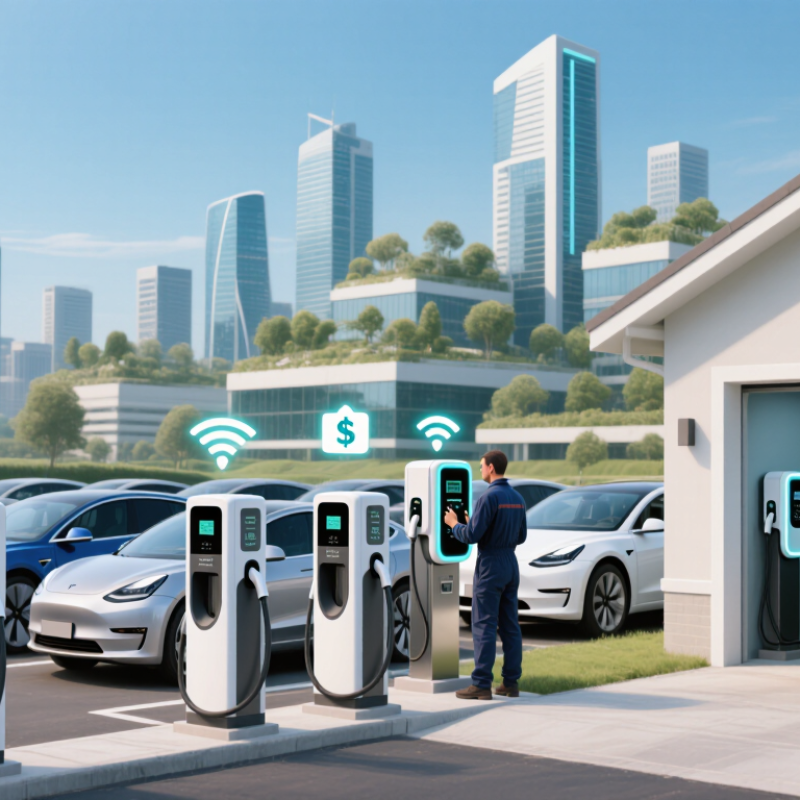
Electric car charging piles are dedicated devices that transfer electricity from the grid to an electric vehicle’s battery. They are often called chargers, but the pile usually controls and delivers power rather than storing it. A home unit commonly uses alternating current, while a rapid public unit may provide direct current. The vehicle’s onboard system and the pile must communicate before charging begins.
A charging pile includes a cable or socket, control panel, circuit protection, and communication software. Some models show voltage, current, charging time, and energy use on a screen. Others connect with a mobile application or payment system. Safety features can stop charging when a plug overheats, a cable is damaged, or grounding becomes unstable. Small details matter.
In practical installations, location affects performance as much as rated power. A pile beside a damp parking area needs suitable weather protection and careful electrical installation. A high-power unit may also require upgraded cables, ventilation, and stronger grid capacity. Not every site needs speed. A residential driver may prefer steady overnight charging, while a taxi station may need faster energy delivery.
When comparing electric car charging pile suppliers in 2026, buyers should examine testing records, service response, spare-part access, software compatibility, and installation guidance. I have found that impressive power figures can distract from reliability. The real question is whether the equipment works safely during rain, heat, repeated use, and occasional communication failures. Even experienced operators can overlook maintenance planning. That deserves honest review.
2026 Top Electric Car Charging Pile Suppliers? - What Are Electric Car Charging Piles?
| Charging Pile Category | Typical AC/DC Output | Typical Input | Approximate Charging Use | Common Installation Locations | Key Supplier Evaluation Criteria |
|---|---|---|---|---|---|
| AC Level 1 | Approximately 1.4–1.9 kW | Single-phase household outlet; commonly 120 V AC in North America | Overnight home charging; generally adds about 3–8 km of driving range per hour, depending on vehicle efficiency | Residential garages and temporary charging locations | Electrical safety, cable quality, temperature protection, plug compatibility, and compliance certification |
| AC Level 2 | Typically 3.7–22 kW | Single-phase or three-phase AC; commonly 208–240 V in North America and 230/400 V in many other markets | Home, workplace, hotel, and destination charging; commonly adds about 25–130 km per hour, depending on power and vehicle limits | Homes, offices, shopping centers, hotels, parking facilities, and public destinations | Rated power, connector options, load management, network communication, weather resistance, warranty, and installation support |
| DC Fast Charging | Approximately 25–180 kW | Three-phase commercial AC converted to regulated DC | Public and fleet charging; many compatible vehicles can gain a substantial charge within approximately 20–60 minutes | Urban charging hubs, retail sites, transport corridors, fleet depots, and service areas | Conversion efficiency, thermal management, uptime, payment systems, remote diagnostics, connector standards, and service response |
| High-Power DC Charging | Typically 150–350 kW; some systems are designed for higher outputs | Dedicated high-capacity three-phase electrical service | Rapid highway and commercial charging; actual charging speed is limited by the vehicle, battery temperature, and state of charge | Highway corridors, large charging plazas, logistics centers, and commercial fleets | Grid capacity, power sharing, cooling design, peak-load control, safety certification, uptime guarantees, and long-term maintenance |
| Portable EV Charger | Usually 1.4–7.4 kW AC | Standard household or industrial socket, depending on model | Emergency, travel, and temporary charging where fixed equipment is unavailable | Residential, travel, roadside, and temporary work sites | Adjustable current, residual-current protection, ingress protection, cable durability, portability, and plug adapters |
| Fleet Charging System | From approximately 7 kW AC to 350 kW DC, depending on fleet requirements | Dedicated commercial electrical infrastructure with energy management | Scheduled overnight charging, opportunity charging, and depot-based vehicle operations | Bus depots, delivery hubs, logistics facilities, taxi centers, and company parking areas | Vehicle scheduling, dynamic load balancing, energy monitoring, software integration, uptime, expandability, and total operating cost |
Related Posts
-
Top 10 Electric Car Charging Piles for Global Buyers?
-
Top 10 Solar Inverters and Battery Storage Options for Energy Efficiency?
-

How to Choose the Best Volt Evse Distribution System?
-

What is Theragun Pro Charging and How Does It Work?
-

Top Domestic Solar Battery Systems for Home Energy Storage?
-

2026 Best Hypervolt Plus Battery Life What to Expect?