5 Best Massage Gun Charging Cords for Global Buyers?
A reliable Massage Gun Charging Cord is easy to overlook until a recovery session stops halfway. Global buyers face different plug systems, USB standards, voltage expectations, and connector shapes. The wrong cable may fit physically but charge slowly, disconnect repeatedly, or create unnecessary heat. Fit is not proof of safety.
Grand View Research valued the global massage gun market at approximately USD 548 million in 2022. Its report also projected continued growth through 2030. More devices mean more replacement accessories, yet charging cords remain poorly standardized across brands. That gap makes careful comparison essential. This article examines five practical Massage Gun Charging Cord options for international users, focusing on connector compatibility, charging output, cable durability, portability, and manufacturer documentation.
USB-IF President and COO Jeff Ravencraft has described USB Type-C as “a small, reversible connector that can support higher power and data capabilities.” That principle matters, but USB-C alone does not guarantee correct charging. Buyers should verify the gun’s input rating, polarity, wattage, and required adapter. Look for clear specifications, strain relief near the plug, and recognized safety testing. UL Solutions and other certification bodies stress the value of traceable product information, especially for electrical accessories.
Some recommendations may seem obvious. They are still useful. A short cord can reduce desk clutter, while a braided jacket may survive repeated travel. However, “universal” claims deserve skepticism. One overlooked barrel size can make an otherwise excellent cord useless. Real-world compatibility is imperfect, and product listings sometimes omit critical measurements. The best choice is therefore not the cheapest cable, but the one matched precisely to the device and region.
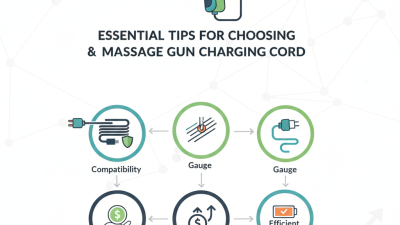
What to Check Before Choosing a Massage Gun Charging Cord
5 Best Massage Gun Charging Cords for Global Buyers?
What to Check Before Choosing a Massage Gun Charging Cord
A massage gun charging cord looks simple, but compatibility is not universal. I learned this after a replacement cable fit the port yet charged nothing. Check the connector shape and size carefully. A barrel plug can look correct while its inner diameter differs. USB-C is not automatically suitable for every device. Confirm the manual’s required voltage, current, and charging method. Never guess from appearance.
Polarity matters for barrel connectors. The center may be positive or negative. Using the wrong polarity can damage charging circuitry. Inspect the cable label and adapter specifications before buying. A cord rated for equal or higher current is generally safer, but voltage must match exactly. If the specifications are missing, contact the seller or choose another option. That is a warning sign. A multimeter can verify output, but only if you know how to use it safely.
Daily use reveals other issues. Choose flexible insulation, reinforced strain relief, and enough length for your charging space. A one-meter cord may work on a desk but pull at an outlet. Watch for heat, loose connections, and fraying near the plug. Heat during charging deserves attention. Stop using a cord that smells unusual or becomes excessively warm. I still make one mistake: focusing on price before checking return terms. A clear return policy helps when measurements are uncertain. Keep the original cord for comparison.
How Charging Cord Types Differ Across Massage Gun Models
5 Best Massage Gun Charging Cords for Global Buyers?
How Charging Cord Types Differ Across Massage Gun Models
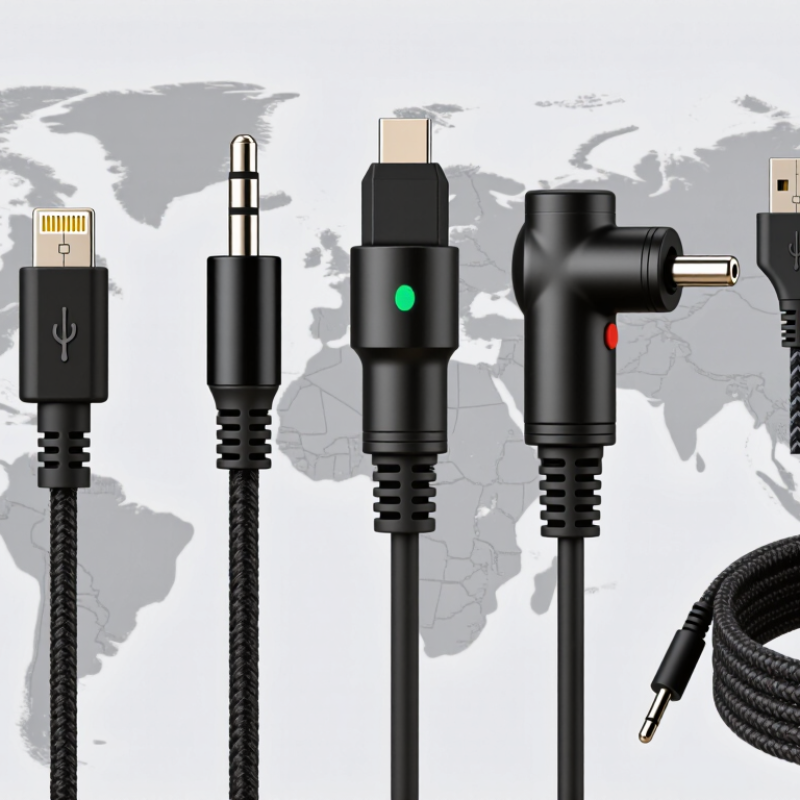
Charging cords for massage guns are not interchangeable. Barrel-plug cords remain common on older models, while USB-C cords appear more often in newer devices. Some compact units use magnetic connectors or custom two-pin cables. The plug shape is only one detail. Voltage, current, polarity, and charging-control systems also matter.
USB-C is usually the most travel-friendly option. The USB Implementers Forum states that USB Power Delivery can support up to 240 watts, although most massage guns need far less. A lower-power USB-C charger may still charge slowly or fail to start the device. Standard USB-A to USB-C cables can work, but only when the gun accepts that input. Never judge compatibility by appearance alone.
Barrel cords need closer inspection. A 12-volt cable may fit physically but deliver the wrong current. That can create heat around the adapter or charging socket. IEC 62368-1 addresses energy and fire hazards in audio, video, and information equipment, offering useful safety principles for charger selection. The U.S. Department of Energy also reports that inefficient external power supplies waste energy, so certified adapters deserve preference.
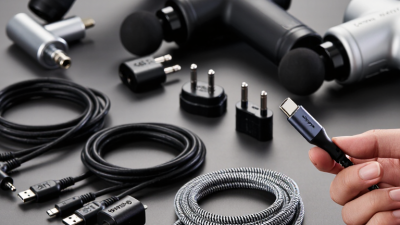
For global buyers, five practical choices stand out: USB-C to USB-C, USB-A to USB-C, a correctly matched barrel cord, a magnetic charging cable, and the manufacturer-specified replacement cord. I have found cable length affects daily use more than expected. A one-meter cord works beside a desk; it feels awkward beside a treatment table. Check the manual twice. That small step prevents expensive guesswork.
5 Best Massage Gun Charging Cords for Global Buyers
How charging cord types differ across massage gun models
The chart compares representative charging setups commonly found in massage guns. USB-C and USB-A to USB-C cords are often paired with 5 V / 2 A adapters, while Micro-USB and magnetic pogo-pin systems commonly use 5 V / 1 A charging. DC barrel connectors may use higher-voltage adapters, such as 12 V / 1 A. Always confirm connector size, voltage, polarity, and current requirements before purchasing a replacement cord.
The 5 Best Massage Gun Charging Cords for International Buyers
The 5 Best Massage Gun Charging Cords for International Buyers
Choosing a massage gun charging cord requires more than matching the connector shape. The best option is a USB-C to USB-C cable when the device supports USB Power Delivery. It usually handles modern charging safely and works with many international adapters. A USB-A to USB-C cord is useful for older wall chargers, laptops, and airport power stations. Check the device manual first.
A USB-A to micro-USB cord remains suitable for older massage guns. It is widely available, but its charging speed may be slower. The fourth choice is a replacement barrel-plug cable with the exact voltage, polarity, and plug size. Never guess these details. The wrong cable can prevent charging or damage internal components. The fifth option is a longer reinforced cable, preferably around two meters, for bedside or studio use. Extra length helps, but it can increase bending near the connector.
Look for firm strain relief, clear specifications, and tested safety performance. During inspection, connect the cord for ten minutes and check for unusual heat, looseness, or intermittent charging. A warm plug needs attention. Cord quality is not always obvious from appearance. I once assumed a thicker cable was safer, but its connector fit poorly. That small mistake changed my buying criteria. International buyers should also confirm that the charger accepts 100–240V. A charging cord does not convert voltage. Use the correct local plug adapter, and keep the original charger when its specifications are unclear.
5 Best Massage Gun Charging Cords for Global Buyers? - The 5 Best Massage Gun Charging Cords for International Buyers
| Rank |
Cord Type |
Connector Configuration |
Typical Electrical Rating |
Common Length |
International Buyer Advantage |
Important Compatibility Check |
| 1 |
USB-C to USB-C charging cable |
USB-C plug on both ends |
Up to 5 V / 3 A for standard USB charging; higher ratings require compatible USB Power Delivery equipment |
1–2 m |
Works with widely available USB-C power adapters and travel chargers |
The massage gun must support USB-C charging; confirm the required voltage and charging protocol |
| 2 |
USB-A to USB-C charging cable |
USB-A plug to USB-C plug |
Typically 5 V / up to 3 A, depending on the cable and power adapter |
1–2 m |
Useful with older wall chargers, laptops, car USB ports, and power banks |
Check that the USB-A power source can provide the current required by the device |
| 3 |
USB-A to Micro-USB charging cable |
USB-A plug to Micro-USB plug |
Usually 5 V / up to 2 A for basic charging applications |
0.5–1.5 m |
Easy to source globally and suitable for older compact massage devices |
The device must have a Micro-USB charging port; do not force the connector into a USB-C port |
| 4 |
DC barrel-plug replacement cord |
Male coaxial DC plug; common sizes include 5.5 × 2.1 mm and 5.5 × 2.5 mm |
Common massage-gun adapters use approximately 12–24 V DC; exact output must match the original adapter |
1.2–1.8 m |
A practical replacement option when the original low-voltage adapter cable is damaged |
Match voltage, current, plug dimensions, polarity, and connector fit; center-positive is common but must be verified |
| 5 |
USB-C to proprietary magnetic charging cord |
USB-C input with device-specific magnetic charging head |
Usually low-voltage USB charging; commonly 5 V, subject to the device’s charging circuit |
1–1.5 m |
Convenient connection and reduced port wear when the device uses magnetic contacts |
The magnetic head must match the device’s contact layout, polarity, magnet spacing, and charging voltage |
Safety note: Before purchasing a replacement cord, compare the original charger’s voltage, current, connector size, polarity, and charging interface with the product requirements. A cable with the correct physical shape is not necessarily electrically compatible.
Global Compatibility: Voltage, Plugs, Ports, and Safety Standards
Choosing among the five best massage gun charging cords requires more than matching the connector. Global buyers should verify input voltage, plug shape, port design, and safety markings. A USB-C to USB-C cord may support modern charging, while USB-A to USB-C suits older adapters. Barrel connectors require exact polarity, diameter, and voltage. Not every cable fits.
Voltage is critical. A plug adapter changes the shape, not the electricity. A 100–240V power supply is usually more practical for international travel, but its output must match the massage gun’s label. The European Commission’s 2023 common-charger assessment estimated annual savings of €250 million and 11,000 tonnes less electronic waste. Standardized ports can help, but only when the charger and cable support the same charging protocol. I still double-check this point.
Safety markings deserve careful inspection. Look for products tested against relevant IEC requirements, including IEC 62368-1 for power-supply safety and IEC 60884-1 for household plugs. USB-IF technical requirements also address connector performance and power negotiation. A cord with a familiar plug is not automatically certified. The cable may feel sturdy yet lack thermal protection. That is easy to miss.
For buyers crossing regions, the strongest choice is a certified 100–240V charger, a correctly rated cable, and a separate plug adapter approved for the destination country. Avoid loose pins, warm connectors, damaged insulation, and unexplained charging interruptions.