How to Choose the Right Solar Inverters and Battery Storage for Your Home?

Choosing the right solar inverters and battery storage for your home is crucial. These components impact energy efficiency and savings. Many homeowners face challenges in making this decision. They often feel overwhelmed by the various options available.

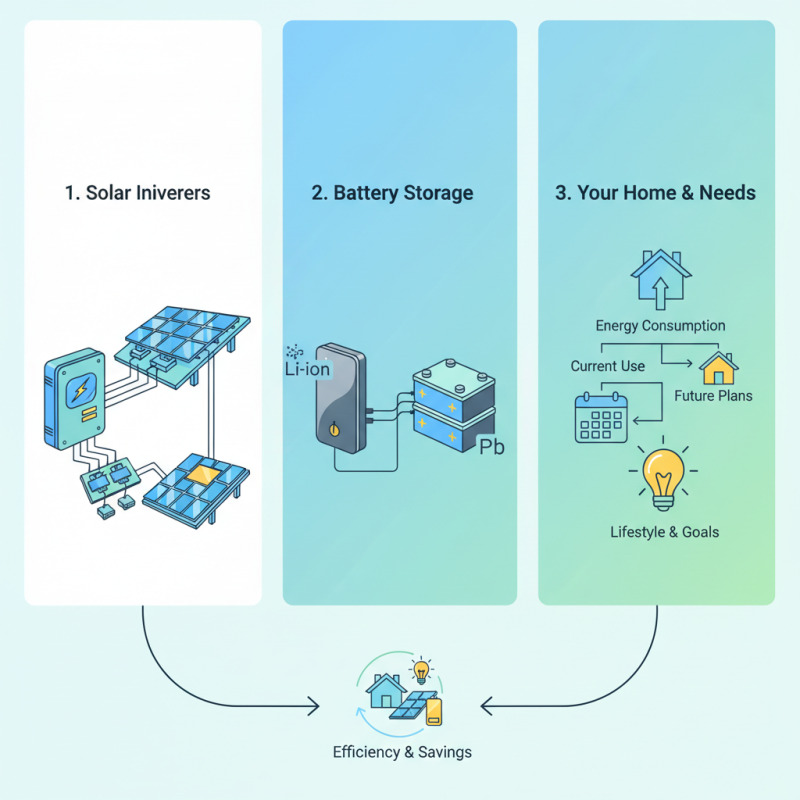
Different types of solar inverters exist, such as string inverters and microinverters. Each type offers unique benefits and drawbacks. Understanding these differences is vital. Battery storage also varies widely. Options range from lithium-ion to lead-acid batteries. Each type has specific characteristics that suit different needs.

Reflecting on your energy consumption and future plans is essential. Think about how much energy you use daily. Are you planning to increase your energy demands in the future? Evaluating your lifestyle can guide your choices. The combination of solar inverters and battery storage must align with your goals. Making decisions without proper information can lead to costly mistakes.
How to Choose the Right Solar Inverters and Battery Storage for Your Home?

Understanding Solar Inverters: Types and Functions Explained
How to Choose the Right Solar Inverters and Battery Storage for Your Home?

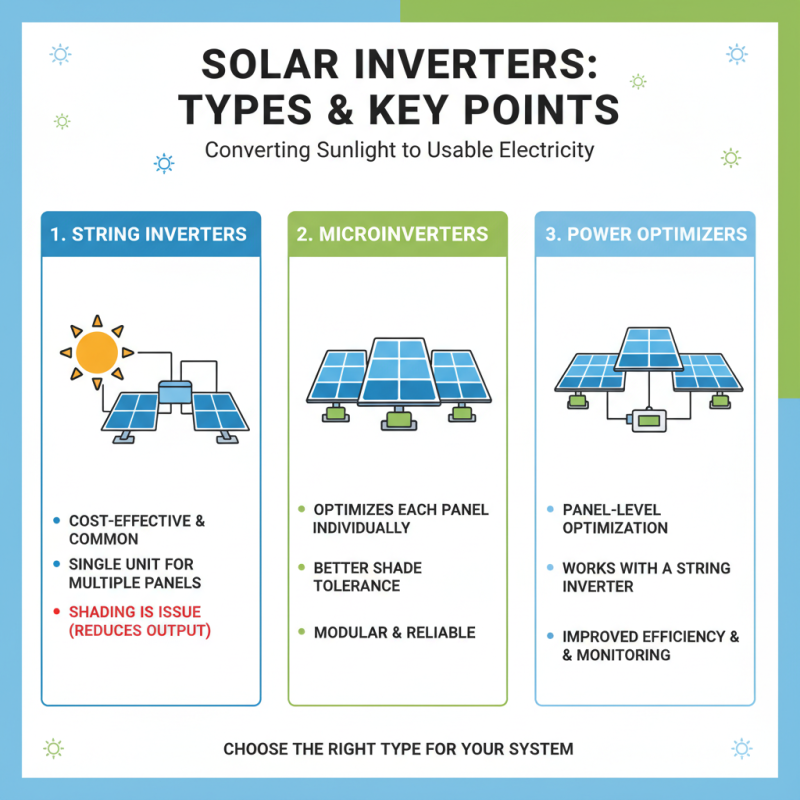
Solar inverters play a crucial role in converting sunlight into usable electricity. They are essential for any solar power system. Understanding the different types is key to choosing the right one. There are string inverters, microinverters, and power optimizers. Each type has its unique advantages and disadvantages. String inverters are common and cost-effective, yet they can struggle with shading issues.

Microinverters, on the other hand, manage each solar panel individually. They optimize energy output better, but they tend to be more expensive. Power optimizers lie somewhere in between. They work with string inverters to improve performance but may require more complex installation. This diversity can be overwhelming for homeowners, especially with so many options available.

Battery storage is equally important. This system allows you to store excess energy for use at night or during outages. Choosing the right battery must consider capacity, lifespan, and efficiency. Lithium-ion batteries are popular but can be costly. Lead-acid batteries are cheaper but don’t last as long. People often overlook these details. It’s essential to reflect on the long-term impacts of your choices. Battery and inverter systems should not merely be an afterthought; they are the backbone of solar energy utilization.
Evaluating Your Home's Energy Needs for Battery Storage

Evaluating your home’s energy needs is crucial when considering battery storage. Start by analyzing your current energy consumption. Look at your utility bills for insights into monthly usage. Calculate your daily needs in kilowatt-hours (kWh). This helps determine the battery capacity you'll require. A home that uses 30 kWh daily may need a substantial battery setup.

Consider your lifestyle as well. Do you work from home? Do you have electric heating or cooling systems? High energy usage throughout the day requires different solutions. Then, think about potential power outages. A backup battery might be necessary if you live in an area with unreliable power supply. Reflect on how long you want emergency power to last.

It's not just about having a battery. You should weigh the cost versus benefits. Cheaper batteries may not last long, so consider longevity and warranty options. Additionally, size matters; a large battery might not fit in your space. Finding the right balance between capacity, size, and cost takes time and research. Understanding these elements will guide you toward the best choice for your home.

How to Choose the Right Solar Inverters and Battery Storage for Your Home? - Evaluating Your Home's Energy Needs for Battery Storage

Energy Need Category Daily Energy Consumption (kWh) Suggested Battery Capacity (kWh) Recommended Inverter Power (kW) Estimated Cost ($)
Small Household 10 5 3 3,000
Medium Household 20 10 5 5,500
Large Household 30 15 7 8,500
Energy Efficient Household 15 7.5 4 4,500

Factors to Consider When Choosing Solar Inverters

Choosing the right solar inverters is crucial for maximizing energy efficiency at home. Consider the type of inverter. There are string inverters, microinverters, and power optimizers. Each has its pros and cons. Think about your roof's layout and shading. Microinverters may handle shading better, but they might cost more.

Efficiency ratings are another important factor. Look for inverters with high performance during different conditions. Some may excel in sunny environments but falter in cloudy times. Warranty terms should also be a consideration. Longer warranties typically indicate confidence in product reliability. Do not overlook the support offered. Local expertise can greatly affect installation success.

Another aspect is your energy requirements. Analyze your daily consumption patterns. It may be disappointing to realize you need more capacity than anticipated. This could lead to higher upfront costs. Lastly, check compatibility with battery storage. An inverter that works well with batteries can enhance your system's efficiency. Be aware that not all combinations yield optimal results.

Key Features of Battery Storage Systems for Home Use

When selecting battery storage for your home, it’s essential to consider key features that enhance efficiency and reliability. Capacity is crucial. It determines how much energy your system can store. Most homes require at least 10 kWh daily for optimal performance. A report from the International Energy Agency (IEA) indicates many households may need 14 kWh or more, especially with electric vehicle charging needs.

Another critical aspect is the depth of discharge (DoD). This figure tells how much energy can be used before recharging. A higher DoD means better utilization of the battery’s capacity. Look for systems offering at least 80% DoD. Manufacturers recommend checking Cycle Life, the number of complete charge/discharge cycles before capacity significantly declines. A good lifespan can range from 3,000 to 6,000 cycles or more.

Tips: Consider future energy needs. Growth in electric vehicle use or new appliances can affect your requirements. Research different technologies like lithium-ion versus lead-acid. Lithium-ion batteries tend to offer higher efficiency and longer life but can be more expensive upfront. Finally, evaluate your energy consumption patterns. Knowing when you use the most power can help optimize storage solutions.

Tips for Ensuring Compatibility Between Inverters and Batteries

How to Choose the Right Solar Inverters and Battery Storage for Your Home?

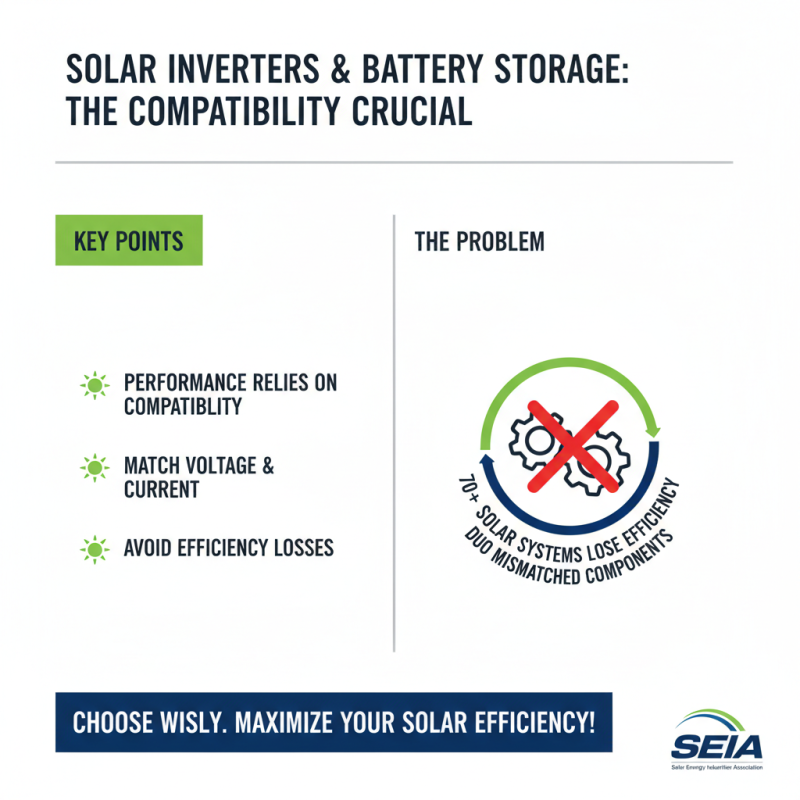
Choosing solar inverters and battery storage is crucial. Compatibility is key for performance. According to a recent study by the Solar Energy Industries Association (SEIA), over 70% of solar energy systems fail to maximize efficiency due to mismatched components. This highlights how vital it is to use inverters that can handle the specific voltage and current of your chosen battery.

Battery chemistry plays a significant role. Lithium-ion batteries and lead-acid batteries have different requirements. For example, lithium-ion systems typically require inverters with a higher output voltage. A mismatch can lead to reduced life span and efficiency. It's essential to check the specifications of both components. Additionally, many homeowners overlook the importance of communication protocols. Inverters need to communicate with batteries for optimal charge and discharge cycles.

In the long run, poor compatibility could lead to costly replacements. A 2022 report noted that nearly 40% of users switched to more compatible systems after experiencing issues. It’s a reminder of the importance of thorough research before making a decision. Always consult with a professional to ensure that your choices will result in a reliable energy solution.