Why Invest in a Solar House Battery System for Your Home?

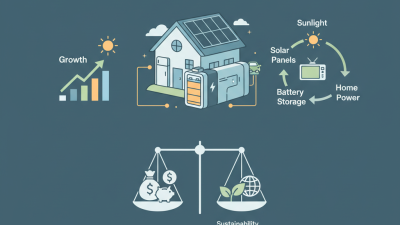
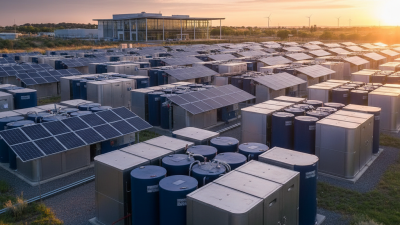
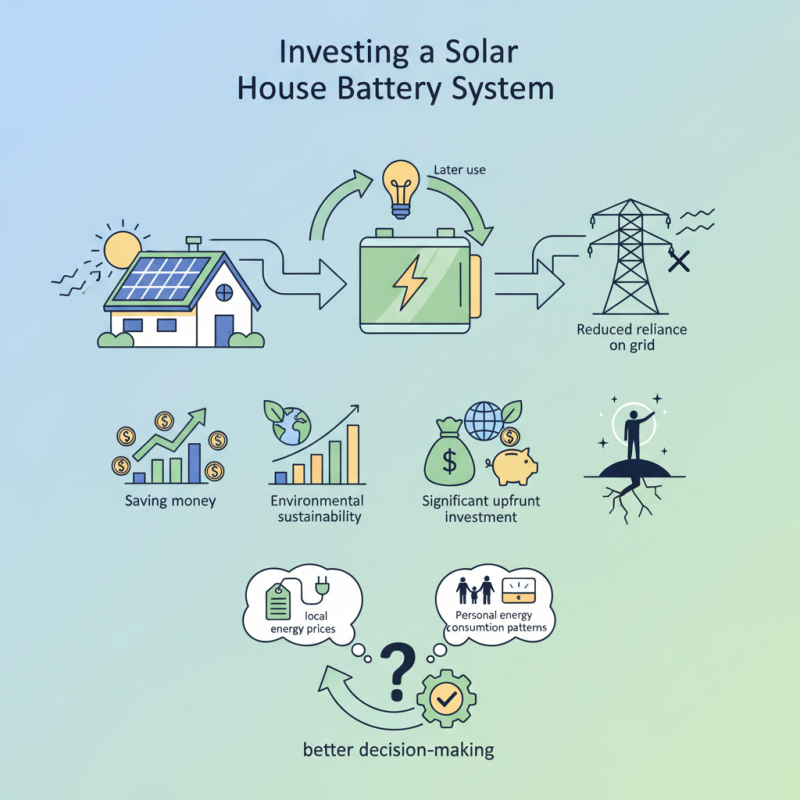
In recent years, homeowners have turned to renewable energy solutions. One promising option is the Solar House Battery System. This technology allows homeowners to store solar energy for later use. It can reduce reliance on the grid and enhance energy independence.

Investing in a Solar House Battery System is not just about saving money. It also contributes to environmental sustainability. Many families face rising energy costs, making this system appealing. However, it often requires a significant upfront investment. This can be daunting for some homeowners.

While the benefits are evident, potential buyers should carefully evaluate their needs. Installing a Solar House Battery System may not suit everyone. It's essential to consider local energy prices and personal energy consumption patterns. A thoughtful approach will lead to better decision-making.
Why Invest in a Solar House Battery System for Your Home?

Benefits of Solar House Battery Systems for Energy Independence
Why Invest in a Solar House Battery System for Your Home?

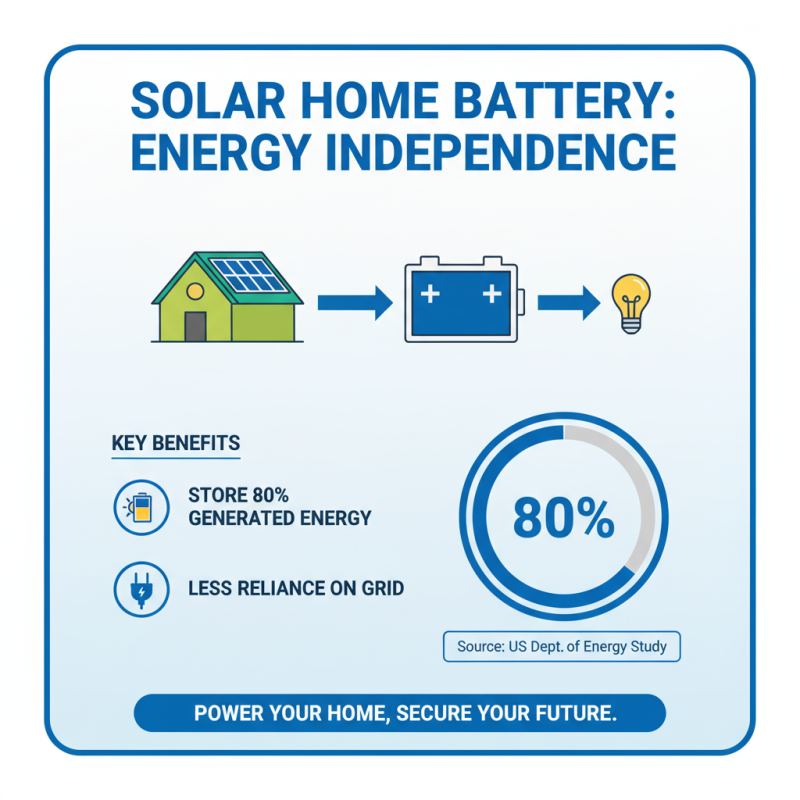
Investing in a solar house battery system can significantly enhance energy independence. A study by the U.S. Department of Energy reports that homes with solar batteries can store roughly 80% of generated energy. This means you rely less on grid electricity, particularly during peak hours.

Imagine a sunny day. Your solar panels generate excess energy. Without a battery, this energy goes unused. A battery system captures it, allowing you to use that energy at night or during cloudy days. This can reduce your energy bills by up to 70%. However, the initial cost can be daunting for some homeowners. Costs may range from $5,000 to $15,000, depending on the system's capacity.

Energy independence does not come without challenges. Battery technology is still evolving. Some systems can degrade quickly, losing efficiency after a few years. Regular maintenance is needed. However, the potential for savings and sustainability makes it worth considering. The average ROI for solar battery systems can be 7-10 years. If your main goal is energy autonomy, a solar battery system deserves serious thought.
Cost Savings: How Solar Batteries Can Lower Your Electricity Bills

Investing in a solar house battery system is a practical choice for many homeowners. Solar batteries store excess energy generated during sunny days. This stored energy can be used at night or during cloudy days. With a reliable backup, electricity bills can drop significantly. Homeowners can rely less on grid power.

The cost savings from solar batteries can be substantial. Energy is often cheaper during the day when solar production is high. By using stored energy at night, families avoid higher peak rates. This can lead to noticeable savings on monthly electricity bills. Over time, the initial investment in a battery system can pay off.

Many people hesitate to switch to solar batteries. Some worry about the upfront costs or installation challenges. It's also important to consider lifespan and maintenance. Yet, the long-term benefits often outweigh these concerns. A little patience and planning can lead to a more sustainable and cost-effective home.

Why Invest in a Solar House Battery System for Your Home? - Cost Savings: How Solar Batteries Can Lower Your Electricity Bills

Feature Benefits Estimated Savings per Year ($) Return on Investment (%)
Reduced Electricity Bills By storing solar energy, homeowners can reduce their reliance on grid electricity. $600 20%
Energy Independence Less dependency on utility companies and fluctuating energy prices. $500 18%
Net Metering Advantages Excess energy can be sold back to the grid, further reducing costs. $400 15%
Backup Power Supply Solar batteries provide energy during outages, enhancing security and comfort. $300 10%
Government Incentives Tax credits and rebates can significantly lower the initial investment. $800 25%

Environmental Impact: Reducing Carbon Footprint with Solar Storage

Why Invest in a Solar House Battery System for Your Home?

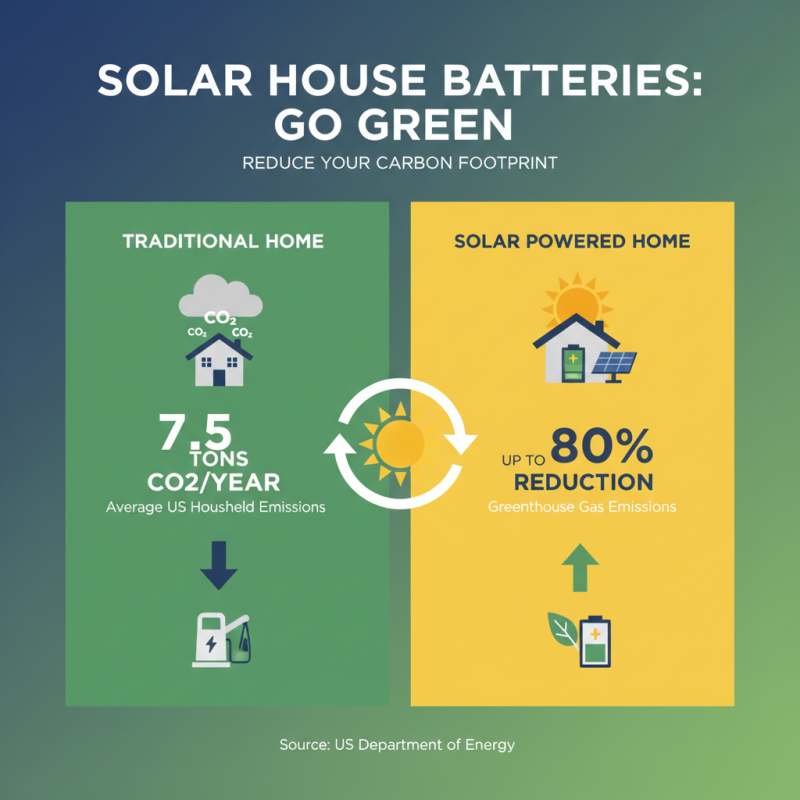
Investing in a solar house battery system can significantly reduce your carbon footprint. According to the U.S. Department of Energy, the average American household emits around 7.5 tons of CO2 per year. By utilizing solar storage, homes can lower their reliance on fossil fuels. This shift can lead to a reduction of up to 80% in greenhouse gas emissions for residents in sunny regions.

A solar battery stores excess energy generated during the day. This stored energy can then power your home at night or during cloudy days. The International Renewable Energy Agency highlights that advancing solar storage technology has shown potential to further lower emissions by 30% over the next decade. While individual results may vary, the potential to contribute to a cleaner environment is clear.

Tips: Consider your local climate and solar potential before investing. A thorough analysis can help you estimate savings accurately. Also, not all battery systems are created equal. Researching the best options is crucial for maximizing environmental benefits. Making informed decisions is key.

Energy Reliability: Backup Power Solutions During Outages

Power outages are becoming increasingly common. According to the U.S. Energy Information Administration, outages have increased by 70% over the last decade. This trend can disrupt daily life and cause significant financial losses. A solar house battery system can provide an effective backup power solution.

When the grid goes down, most households face challenges. Limited access to electricity leaves families in the dark. Essential devices, like refrigerators and medical equipment, may stop working. A solar battery can store energy produced during the day. This stored energy can power your home even during outages.

The National Renewable Energy Laboratory states that homes with battery storage systems can reduce reliance on the grid by up to 80%. This independence not only enhances energy security but can also lower utility bills in the long run. However, choosing the right system requires careful consideration of energy needs and local regulations. Not every home will benefit equally, so it's crucial to assess specific circumstances before investing.

Factors to Consider When Choosing a Solar Battery System for Your Home

When considering a solar battery system for your home, there are several important factors. Capacity is significant. It determines how much energy your battery can store. Calculate your household energy needs to choose a suitable size. Larger batteries can store more power but might be more expensive.

Design matters too. Choose a system that fits your home’s layout. Look for compact options if space is limited. This can make installation smoother and more efficient.

**Tip:** Assess your energy usage patterns. If you primarily use energy at night, ensure the battery can store enough for that period.

Consider the battery's lifespan. Some batteries last longer than others. Yet, they may come at a higher price. Balancing cost and longevity is crucial. Check warranties and service options from manufacturers.

**Tip:** Research installation requirements. Some systems may need professional help, while others are DIY-friendly.

Lastly, think about environmental impact. Opt for batteries that have eco-friendly components. While they might be pricier, they can provide peace of mind. Each decision shapes your home's energy future.

Benefits of Investing in a Solar House Battery System

This chart illustrates the key benefits of investing in a solar house battery system. Each benefit is rated on a scale from 1 to 10, indicating its potential impact on homeowners. Investing in solar batteries not only leads to cost savings and energy independence but also contributes positively to the environment and increases home value.